Tesla's Full Self-Driving Software Encounters Repeated Train Crossing Failures
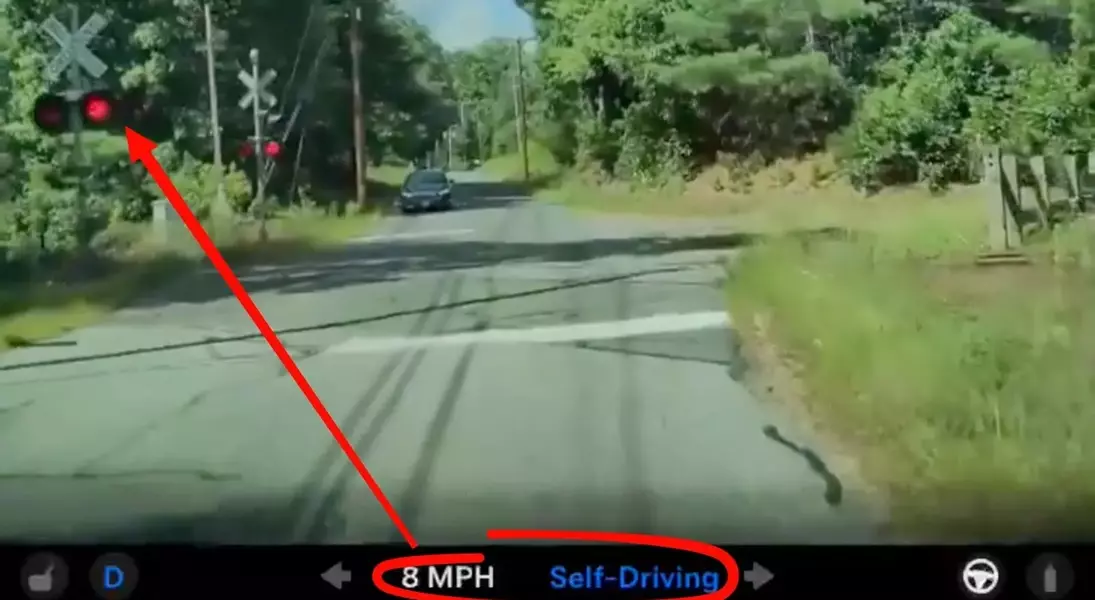
Tesla's Full Self-Driving (FSD) system has repeatedly shown alarming deficiencies at railroad crossings, with new reports highlighting a Tesla vehicle almost colliding with a train despite the latest software being installed. This incident adds to a growing list of similar failures documented by Electrek this year, indicating a persistent and dangerous issue within the advanced driver-assistance system.
A recent event captured on dashcam footage involved a Tesla operating on FSD v14.3.7, the most current version available. The vehicle approached a railroad crossing with flashing signals and audible train horns, yet it continued to proceed, only slowing down minimally. The driver was forced to intervene manually to prevent a collision with the oncoming train. This particular software update was advertised to include enhancements for handling unusual objects in the vehicle's path, a claim that appears to be contradicted by the system's behavior at these critical intersections.
The recurrent nature of these incidents is troubling. Previous reports include a Tesla driving through lowered crossing barriers in California and another crashing through a gate in Texas, narrowly avoiding an impact with a train. In one severe case, a Tesla in "self-driving mode" was actually struck by a train. These incidents underscore a systemic problem that has attracted the attention of government regulators. The National Highway Traffic Safety Administration (NHTSA) initiated an investigation into FSD's safety after numerous reported crashes, and this probe has since expanded to cover millions of FSD-equipped vehicles. Lawmakers have also urged specific investigations into the railroad crossing failures, emphasizing the serious safety risks they pose. Despite these documented shortcomings and ongoing investigations, Tesla continues to market its system as "Full Self-Driving," while simultaneously requiring drivers to remain attentive and prepared to take control, highlighting a significant disparity between marketing and actual capability.
The continued inability of Tesla's FSD system to reliably manage railroad crossings, even with recent software updates, presents a grave safety risk. It demonstrates a fundamental challenge in autonomous driving technology's ability to consistently interpret and react to clear, critical signals in real-world scenarios. Addressing these persistent flaws is paramount for the safety of all road users and for the future credibility of self-driving innovations.