Range and Charging Showdown: VW ID. Polo Outperforms Renault 5 E-Tech in European Road Trip
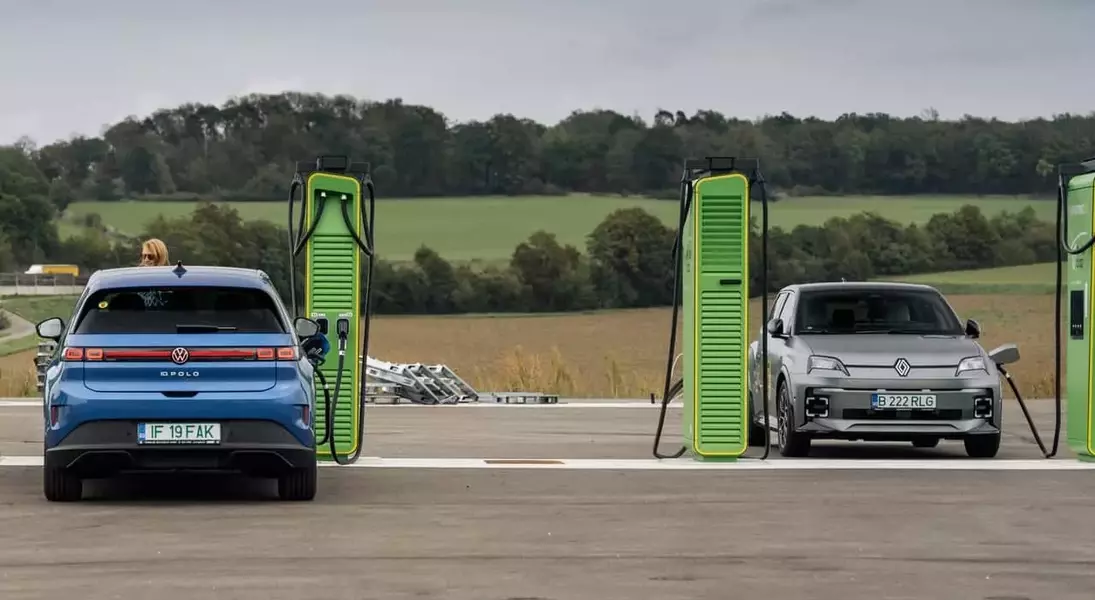
The Ultimate Electric Hatchback Duel: Efficiency and Charging on the Open Road
Comparing Electric Hatchbacks: VW ID. Polo vs. Renault 5 E-Tech
When two electric hatchbacks possess nearly identical battery capacities, it's reasonable to anticipate comparable performance during extended drives. However, a recent European road trip, dubbed Eurocharge by Schaeffler, showcased that while the Volkswagen ID. Polo and the Renault 5 E-Tech shared many similarities, the Polo ultimately emerged as the more capable touring vehicle.
Battery Capacity and Initial Expectations
Both the VW ID. Polo and the Renault 5 E-Tech are equipped with a usable battery capacity of 52 kilowatt-hours. This parity in power storage initially suggested that their efficiency and range would be closely matched. Yet, the road test results painted a clearer picture of their distinct capabilities.
The Efficiency Advantage of the VW ID. Polo
During the Eurocharge journey, particularly on the third day which involved a significant amount of highway driving, the ID. Polo demonstrated superior energy management. It consumed approximately 5.5% less energy per kilometer compared to the Renault 5, achieving an average of 17.2 kWh/100 km (3.61 miles/kWh), while the Renault 5 averaged 18.2 kWh/100 km (3.41 miles/kWh). This efficiency gain translates to a longer potential range for the Polo on a single charge.
Range Projections Based on Real-World Data
Based on the observed energy consumption, the estimated range for the VW ID. Polo was 302 kilometers (188 miles), surpassing the Renault 5's calculated range of 286 kilometers (178 miles). These figures are derived from actual driving conditions and offer a more realistic assessment than theoretical laboratory tests.
Charging Speed: A Decisive Factor
Beyond efficiency, the charging experience significantly differentiated the two vehicles. The Volkswagen ID. Polo spent a total of 77 minutes charging during the road trip, a substantial 25 minutes less than the Renault 5, which required 102 minutes. This time difference highlights the Polo's faster charging curve, with one particular stop contributing 17 minutes to this advantage.
Detailed Charging Analysis and Official Specifications
While direct comparisons of charging speed are complex due to varying initial battery states and environmental conditions, the Polo consistently showed quicker charging times. The Polo charged from 28% to 100% in 43 minutes, whereas the Renault took 60 minutes to go from 23% to 100%. Official specifications indicate similar peak DC fast-charging powers (105 kW for Polo, 100 kW for Renault), but the Polo's advertised 10% to 80% charge time of 24 minutes is quicker than the Renault's 30 minutes for 15% to 80%, reinforcing its practical advantage.
The Broader Implications for EV Road Trips
This comparison underscores that identical battery sizes do not guarantee equal range or charging speed. The VW ID. Polo's superior efficiency and faster charging capabilities bring it closer to offering a driving experience akin to traditional gasoline vehicles for long-distance travel. This makes it a more appealing option for consumers prioritizing convenience and reduced charging stops on their journeys.